In shortUnagi — killed to order. Reservations run in Japanese and are hard to place from abroad, so our Tokyo desk requests the table for you, by phone and in Japanese.
Price
Unajū ¥6,800–7,800 · courses up to ¥22,000 (the top course, small starters included; drinks and 10% consumption tax extra)
Sun, Mon & holidays — and the Day of the Ox, in the eel's honor
Seats
30–40, tatami and tables (sources differ) — three private rooms
Private rooms
Yes — three rooms, 6 to 20+ guests
Payment
Visa, Mastercard, JCB, Amex, Diners — 10% service in the tatami rooms
Getting there
Edogawabashi Stn, 6 min walk — pair with Chinzanso's gardens and a stroll to Kagurazaka
Dress code
No dress code
Every July, on the Day of the Ox — the midsummer date when all of
Japan eats eel — Ishibashi closes. The family, in its fourth
generation since 1910, calls it the eel’s memorial day. That one
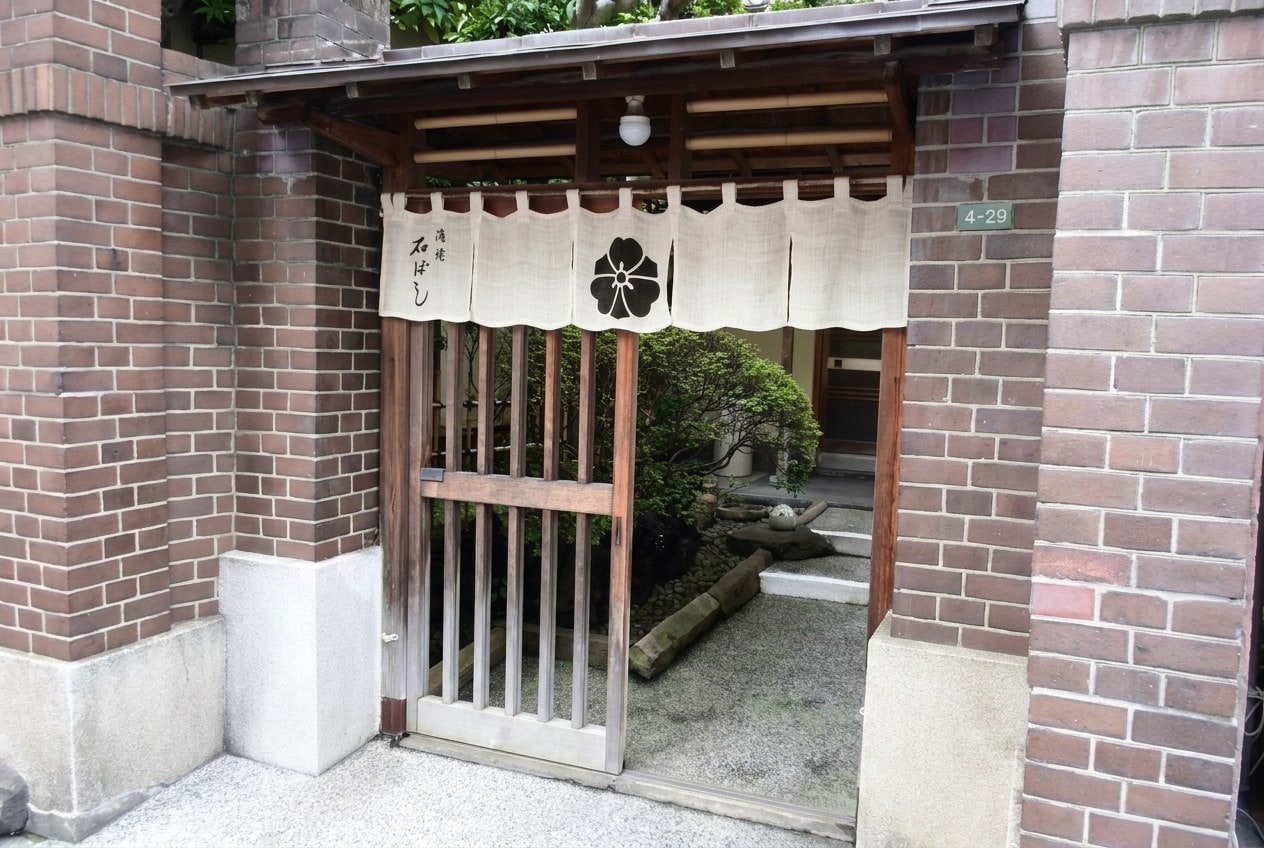
gesture, from a house behind a brick wall that survived the
firebombing, sets the terms: unagi — freshwater eel — is not a menu
item here but the entire point, and it is handled with ceremony.
What you eat
Your eel is committed when you book, not when you sit down. It is
split only after your order, grilled plain, steamed for the better
part of an hour so the fat softens into the flesh, then finished as
kabayaki — glazed and grilled over binchōtan, Japan’s dense white
charcoal, with a tare (sweet soy glaze) the house has fed
continuously since the founding — and served as unajū, eel over rice
in a lacquered box; here the boxes are Wajima lacquerware in use for
a century. The kitchen tells you to expect about an hour from order
to table, and the wait is the ritual: the okami — the proprietress, a
certified sake sommelier — keeps a rotation of bottles for exactly
this hour, alongside pickles from a rice‑bran fermentation bed itself
over a hundred years old. The house heresy, stated flatly: eel’s true
season is winter, not summer.
The booking reality
A telephone answered in Japanese — course seats also book online through Ikyu — and one rule: you decide your eel
when you reserve, because the kitchen starts from a live animal.
Lunch and dinner Tuesday through Saturday; closed Sundays, Mondays,
holidays, and the Day of the Ox. Cancel the day before and half the
course is charged; on the day, all of it — which is exactly why the booking call has to be
precise: grade, headcount, timing. Pre‑school children are not
admitted. None of this is hostile; it is a kitchen that cannot
un‑kill an eel. It is, though, a system built for Japanese‑speaking
planners — which is where a desk that makes the call, fixes your
order, and walks you through the cancellation terms before you commit
earns its keep.
Want to taste what a full extra hour of steam does to eel fat;
like your luxuries slow and pre‑decided; or read "closed on the
busiest eel day of the year, out of respect" and immediately want a
seat — ideally a long lunch between Chinzanso’s garden and an evening
in Kagurazaka.
The house's cancellation charge
From 00:00 JST, 3 days before100%
Same day, with notice100%
Same day, no notice (no-show)100%
Charged by the house, not by us. A plan's own policy takes precedence.
Free release-date alerts: the day before, on the morning of release day (08:00 JST) and about 30 minutes before when the time is known — or a weekly summary if the house opens a little every day.
Edogawa Ishibashi: common questions
Can you book Edogawa Ishibashi from abroad?
Yes, through our Tokyo desk. Phone in Japanese, or Ikyu online for course seats; you choose your eel when you book, and cancellations are charged 50% the day before and 100% on the day. We call the restaurant for you, in Japanese, and the ¥6,000-per-seat fee is charged only if we confirm your table — no seat, no fee.
Some of these links are referral links: if you book through them we may earn a small commission, at no extra cost to you. Restaurants never pay us to be listed or ranked. Editorial policy
Cite this page
Facts on this page were checked by our Tokyo desk. You are welcome to quote them with a link:
Edogawa Ishibashi — Edogawabashi, Tokyo — SHOKU NOREN (checked October 2026). https://shokunoren.com/restaurants/ishibashi-edogawabashi