In shortHamaguri clam cuisine — a century of Kuwana's wild local clams, and nothing else. Reservations run in Japanese and are hard to place from abroad, so our Tokyo desk requests the table for you, by phone and in Japanese.
Price
Hotpot course ¥12,000–18,000 · kaiseki ¥13,000–19,500 · tax & 20% service separate
Hours
Dinner 17:00–21:30 (last order 20:30) · lunch (11:30–14:00) only on occasional days
Closed
Wednesdays, plus about two Tuesdays or Thursdays a month; New Year holidays
Seats
60 seats across seven private rooms — a private room is guaranteed from four guests; parties of two or three may share
Private rooms
Yes — seven rooms; guaranteed from four guests, and smaller parties may be seated with others
Payment
Cards (VISA / Mastercard / JCB / AMEX / Diners) from ¥10,000 · QR codes accepted · no e-money · tax & 20% service separate
Getting there
A walk from Kuwana Station (JR / Kintetsu) into the old castle town
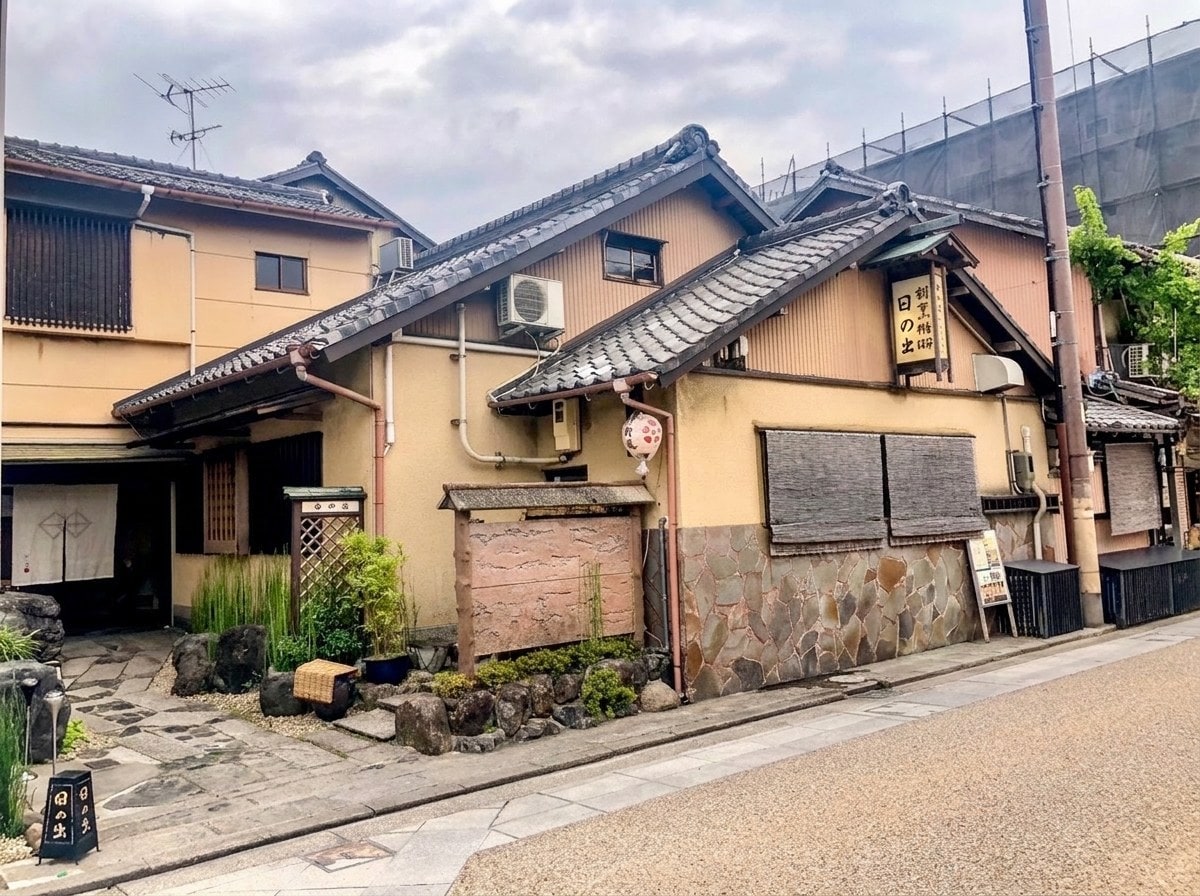
Hinode opened in 1923 in the castle town of Kuwana, between Nagoya
and Ise, and in a century it has never widened its subject: the wild
hamaguri — the large, sweet hard clam — dug from this town’s own
waters. Edo‑period travelers already knew Kuwana this way; an old pun,
“sono te wa Kuwana no yaki‑hamaguri” — roughly, "that trick won’t work
on me," folding the town’s name into its grilled clams — outlived the
highway that carried it. The manga Oishinbo drew the house and its
master in volume 97, and Tabelog — Japan’s dominant restaurant ratings site — lists it among its Japanese‑cuisine WEST 100 (2023, 2025).
The point is not the medals. It is that a one‑ingredient restaurant
has held a national audience for a hundred years on a shellfish most
visitors have only met as a garnish in miso soup.
What you eat
Two courses carry the house. The hotpot course (¥12,000–18,000)
builds toward clam shabu — clams swished briefly in hot broth so they
stay plump — then tempura, clams grilled in the shell, and finally
zōsui, a rice porridge cooked in the broth your own meal has made. The
hamaguri kaiseki (¥13,000–19,500) — kaiseki being Japan’s formal
multi‑course sequence — runs the clam through every register: clear
soup, sashimi, grill, a single‑serving pot, tempura, butter‑yaki, and
shigure kamameshi, pot‑cooked rice with soy‑simmered clams, to close.
Tax and a 20% service charge are separate; in practice dinner lands
Clams appear year‑round, but they fatten before their
early‑summer spawn, so early summer is the true season — which is why the house allocates April to mid‑August by lottery.
The booking reality
By phone — 0594‑22‑0657, answered 11:00–17:00 on business days,
voicemail otherwise — minimum two guests, no same‑day tables. What
matters is the season. Dates from 1 April to 15 August are not taken
over the phone in the usual way: each November the house opens
advance requests for the following year on its website, draws lots
where requests overlap, and telephones only the successful parties in
mid‑to‑late December. Tabelog reviewers report losing the draw two
years running, and others booking a year ahead; dates outside that
window are an ordinary phone booking. Sixty seats sounds generous,
but they sit in seven private rooms, so a party of two or three can
be asked to wait while a larger table confirms — the room math, not
rudeness. Cancellation fees start three days out; preschoolers on
weekends and holidays only. Our desk handles the Japanese side of all
this and will tell you honestly which dates are realistic — nothing
more is promised.
You are routing between Nagoya and Ise or Kyoto and want the one
meal Kuwana has spent four centuries being known for — or you want to
see what a kitchen does when it has had a single ingredient, and a
hundred years, to think about it.
Free release-date alerts: the day before, on the morning of release day (08:00 JST) and about 30 minutes before when the time is known — or a weekly summary if the house opens a little every day.
Hinode: common questions
Can you book Hinode from abroad?
Yes, through our Tokyo desk. By phone in Japanese, minimum two guests, no same-day. Peak-season dates (1 April–15 August) are requested on the house website each November and drawn by lot; only winners are phoned, in December. We call the restaurant for you, in Japanese, and the ¥6,000-per-seat fee is charged only if we confirm your table — no seat, no fee.
Some of these links are referral links: if you book through them we may earn a small commission, at no extra cost to you. Restaurants never pay us to be listed or ranked. Editorial policy
Cite this page
Facts on this page were checked by our Tokyo desk. You are welcome to quote them with a link: