Not all edomae is bright, modern and camera‑ready. There is an older face to the craft — austere, deeply savory, built on cured fish and rice sharpened with red vinegar and salt rather than sugar. This is the classic school, and its clearest line runs from the Meiji‑era Futaba house through Kiyota and all the way to Kyushu. Here is how it connects.
The Futaba house and its masters
Futaba Zushi, founded in 1877, was more than a restaurant: it ran a craftsmen’s dispatch guild — the Futaba‑kai, which at its peak counted more than ninety chefs — that supplied and trained sushi chefs across the Taisho and Showa eras. Its rice — seasoned with red vinegar and salt, no sugar — became a signature of the classic style, and the house produced a celebrated group of masters who fanned out into their own counters. Futaba’s place in the wider map is covered in our family tree of edomae sushi.
What salt‑and‑red‑vinegar actually means
The rice is the manifesto. Akazu, red vinegar, is pressed from sake lees aged for years until they darken — in the Edo period it was the cheap, abundant seasoning of the townsman’s sushi, when rice vinegar and sugar were dear, as our history of sushi recounts. Seasoned with akazu and salt alone, the shari turns the color of weak tea and tastes savory and faintly sweet from the lees themselves — no added sugar, nothing to flatter. Over rice like that, the fish must be worked: kohada cured in salt and vinegar, tuna marinated as zuke, clams simmered and glazed — the preservation techniques of a city without refrigeration, kept long after the need for them passed, because they concentrate flavor in a way ice never will. Eating a counter in this school today, expect fewer pristine raw slices and more of that cured, deeply seasoned register — closer in spirit to the food of Edo itself than anything else served in modern Tokyo.
Kiyota: the classic salt‑and‑red‑vinegar line
Among those masters was Shigezo Fujimoto, counted among the ‘four heavenly kings’ of Futaba, who founded Kiyota in the 1960s. Under its second master, Takeaki Niitsu — who took over within a few years and ran the counter until he retired at the end of 2000 — Kiyota became a legend of the Tokyo sushi world, working in the restrained, cured idiom of the old school. It reopened in 2001 and has passed through successive masters rather than expanding into a large modern group, which is part of why it feels closer to the roots of edomae than to the glossy counters of today.
A short text tree:
- Futaba Zushi (1877)
- Kiyota (founded by Shigezo Fujimoto; second master Takeaki Niitsu)
- Tsukuta (Karatsu, Kyushu; Yuji Matsuo, who trained under Niitsu)
- Kiyota (founded by Shigezo Fujimoto; second master Takeaki Niitsu)
The line reaches Karatsu: Tsukuta
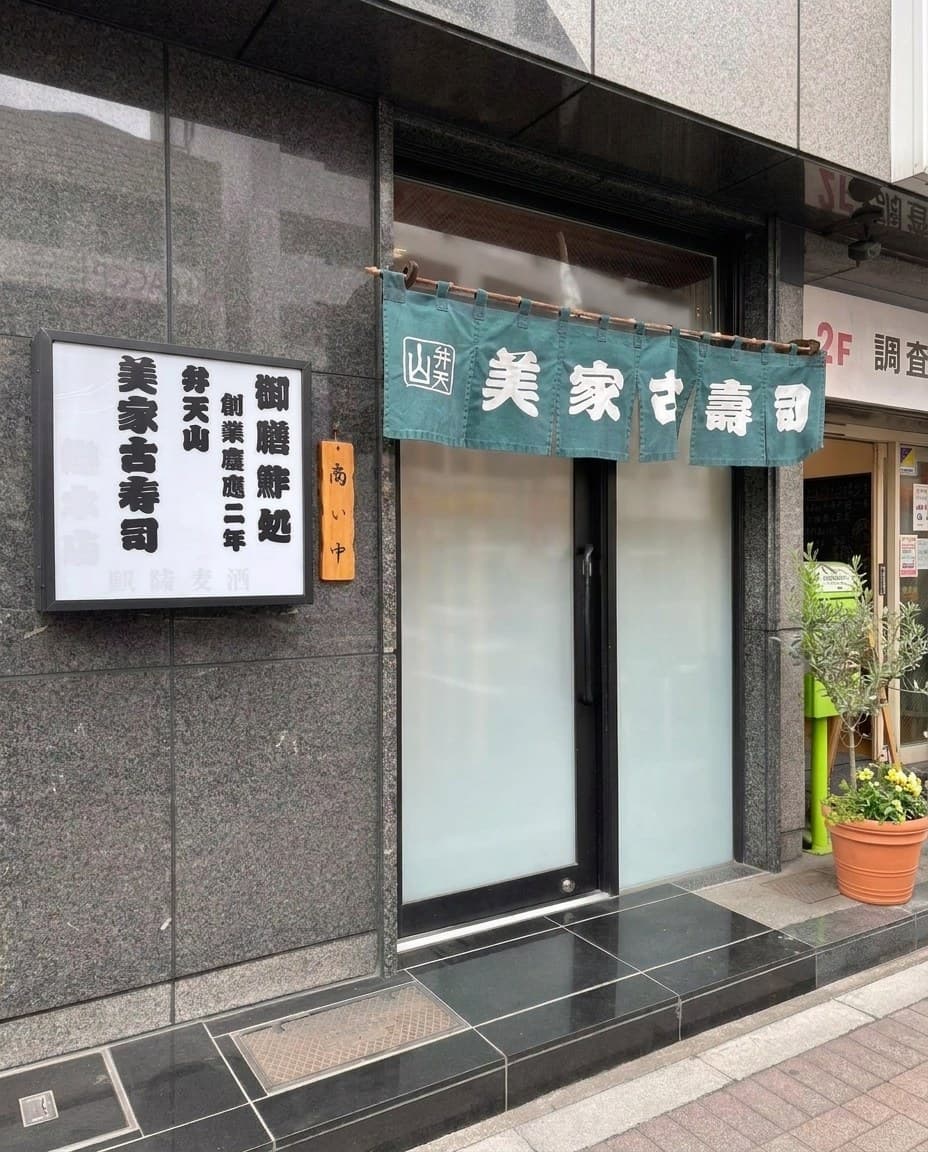
The tradition did not stay in Tokyo. It reached the castle town of Karatsu in Saga, where Sushidokoro Tsukuta carries the classic style forward. Its chef, Yuji Matsuo, traveled to Tokyo to train at Kiyota under Niitsu, and the “ta” in Tsukuta’s name is borrowed from Kiyota — a rare chance to eat this austere, historically grounded edomae outside the capital. It sits alongside other keepers of the old craft, such as Asakusa’s Bentenyama Miyakozushi, which descends from a different but equally venerable classic line.
Why the old style matters now
In a sushi world that often chases novelty, the Kiyota and Futaba line is a reminder of where the craft came from: fewer flourishes, more patience, and rice that tastes of vinegar and time. It is also quietly winning the argument — many of Tokyo’s most celebrated modern counters have returned to akazu rice and long curing, so the old school’s vocabulary is now the connoisseur’s shibboleth. For eaters who want the deep, quiet version of edomae rather than the spectacle, this is the lineage to seek — and unlike the famous introduction‑only rooms, its keepers can be booked: Kiyota on Ikyu when its dates open on the 20th of each month, Tsukuta by phone, an Ikyu request or the house LINE. Tell our desk you want the classic style, and we will point you to the counter that keeps it.