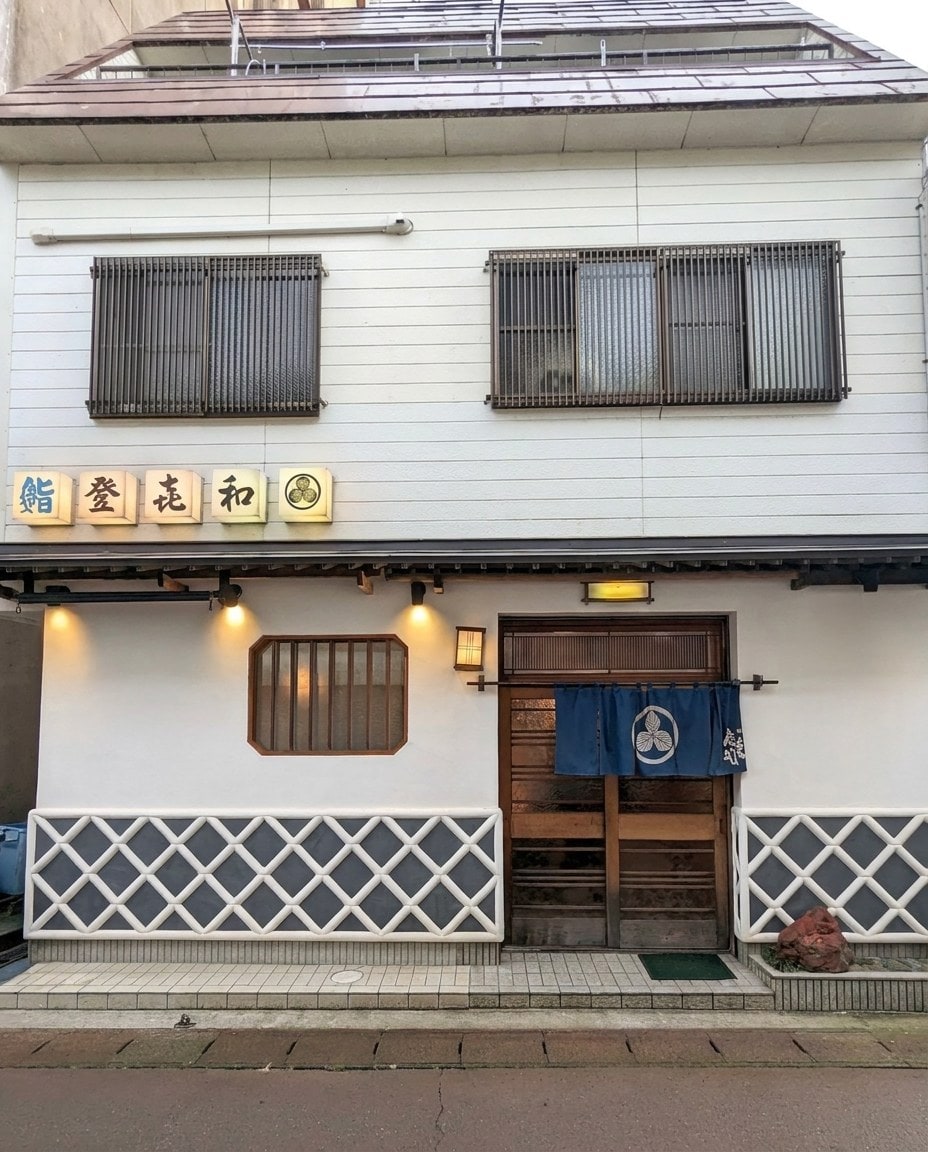
In shortSushi — "Niigata-mae," 99% local, famously no uni. Reservations run in Japanese and are hard to place from abroad, so our Tokyo desk requests the table for you, by phone and in Japanese.
Price
Omakase ¥23,000 before tax at both counters · Thu–Fri lunch nigiri course ¥13,000 before tax
Hours
Shibata (Sat–Sun): lunch 11:30 · dinner 17:30 & 20:30 Sat, 18:00 or 19:00 Sun · Niigata branch (Mon–Fri): lunch 12:00 Thu–Fri · dinner 18:00 or 19:00 — simultaneous starts
Cards accepted (VISA · Mastercard · JCB · AMEX · Diners) · no service charge
Getting there
Shibata, Niigata — 2 hrs Tokyo→Niigata by shinkansen + 35 min local; pair with Tsukioka Onsen (20 min)
Dress code
No dress code
Kosuke Kobayashi was chasing work as a professional drummer in Tokyo
when his father collapsed. He came home to Shibata — a small castle
town beyond Niigata City — took over the family’s third‑generation
sushi‑ya (neighborhood sushi restaurant), then in its eighth decade,
and rebuilt it around one rule: 99% of everything served comes from
Niigata’s own sea and soil. Because he buys only what local boats land
reliably, there is no uni (sea urchin) — the omission the counter is
known by. "The old Edo craftsmen invented their techniques because
ingredients were limited,“ he says. ”I wanted to bring that spirit to
my sea." Michelin gave the counter a star in 2020, and the Japan Times
named it a Destination Restaurant in 2024.
What you eat
Sweet nanban shrimp from Sado Island, air‑dried overnight and dusted
with a powder ground from their own shells; nodoguro — blackthroat
seaperch, the Sea of Japan’s fattiest prize — warmed in a broth of its
own bones; anago (conger eel) lacquered with a tare, a mother sauce
topped up and never replaced, running since 1954; rice from Shibata
paddies cooked in an iron kama (pot). Dinner is a single omakase —
chef’s choice — course at ¥23,000 before tax; Thursday and Friday
lunch at the Niigata counter is a nigiri‑only course at ¥13,000, the
quiet way in.
The booking reality
Ten counter seats, everyone seated at once — and, since the 70th-
anniversary expansion in 2024, split across two towns: the Shibata
original serves weekends only, the newer Niigata City counter takes
the weekdays. Reservations run online only — the house has stopped taking phone bookings — through OMAKASE, a Japanese fine‑dining booking platform, on two separate store pages, each opening the whole month two months ahead on the 1st at 11:00 JST (Pocket Concierge and Ikyu occasionally list seats too); you must
first solve which town, which day, and which of the fixed start times
fits your route, and that calendar is where most overseas plans die.
The triage is the desk’s work: we watch both books, handle the
platform mechanics, and confirm the details with the house in
Japanese.
Come here if you have done Tokyo and want to taste what terroir
means in nigiri form, or if you hear of “the sushi‑ya with no uni”
and need to know why.
The house's cancellation charge
From 00:00 JST, 7 days before30%
From 00:00 JST, 5 days before50%
From 00:00 JST, 3 days before100%
Same day, with notice100%
Same day, no notice (no-show)100%
Charged by the house, not by us. A plan's own policy takes precedence.
Free release-date alerts: the day before, on the morning of release day (08:00 JST) and about 30 minutes before when the time is known — or a weekly summary if the house opens a little every day.
Tokiwa Sushi: common questions
Can you book Tokiwa Sushi from abroad?
Yes, through our Tokyo desk. Online only — phone bookings have ended. OMAKASE opens the whole month two months ahead on the 1st at 11:00 JST, on separate pages for the two towns (Pocket Concierge and Ikyu occasionally list seats). The original serves weekends, the Niigata branch weekdays; everyone is seated at once. We call the restaurant for you, in Japanese, and the ¥6,000-per-seat fee is charged only if we confirm your table — no seat, no fee.
Some of these links are referral links: if you book through them we may earn a small commission, at no extra cost to you. Restaurants never pay us to be listed or ranked. Editorial policy
Cite this page
Facts on this page were checked by our Tokyo desk. You are welcome to quote them with a link: