In shortRyōtei kaiseki — geisha culture, still alive. Reservations run in Japanese and are hard to place from abroad, so our Tokyo desk requests the table for you, by phone and in Japanese.
Price
Weekday lunch set ¥8,800 · lunch kaiseki ¥14,000–34,000 · dinner kaiseki ¥20,000–34,000 · 15% service charge
Hours
Lunch 11:30–14:00 · Dinner 17:00–22:00 (dinner bookings from 18:30)
Closed
Irregular — mainly the summer break and New Year
Seats
60, all on tatami
Private rooms
All private — seven rooms, 2 to 60 guests; shoes off
Payment
Cards accepted (no e-money or QR codes) · 15% service charge
Getting there
Yokohama Stn west exit, 7 min walk — up the stone steps of the old Tōkaidō post road
Open Hiroshige’s Fifty‑Three Stations of the Tōkaidō to the
Kanagawa print: a row of teahouses on a bluff above the bay. This is
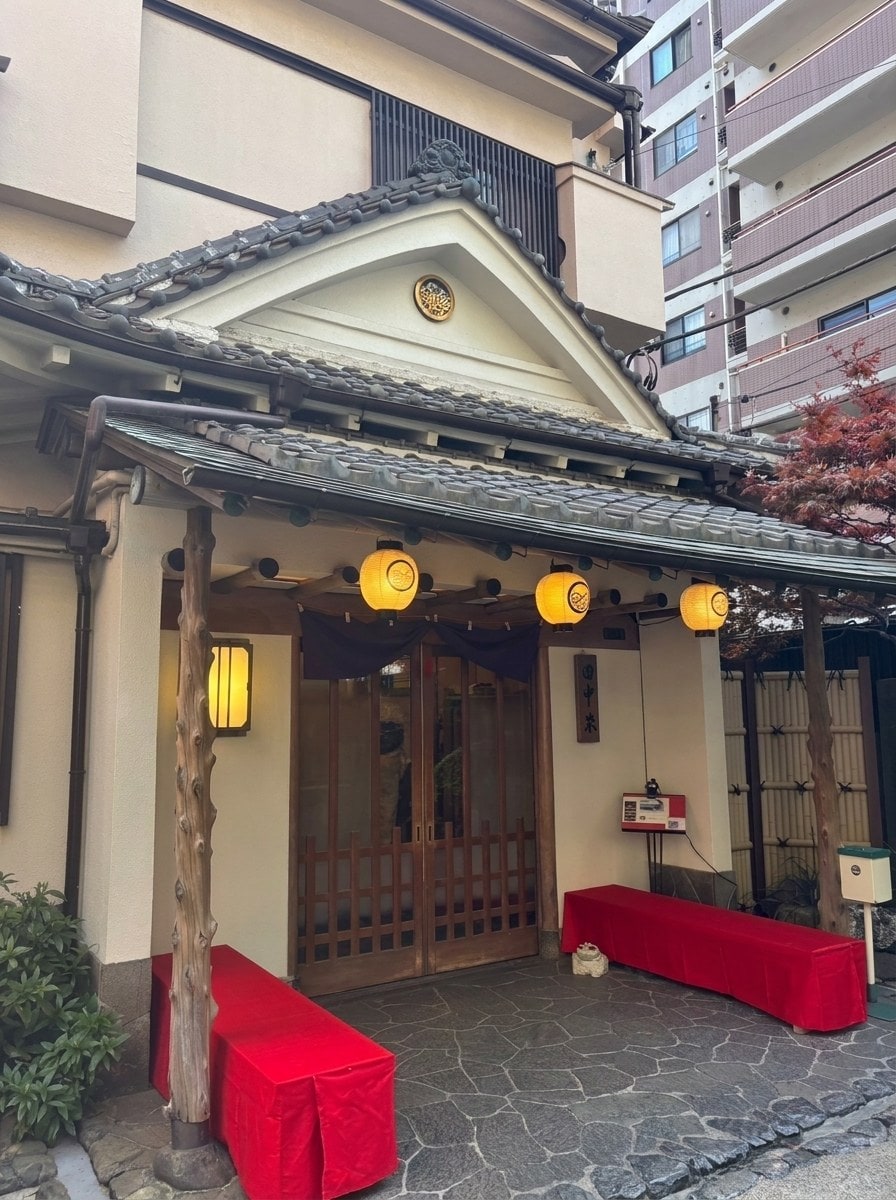
one of those houses, rebuilt as a ryōtei — a traditional banquet
restaurant of private rooms, attendants and entertainment — in 1863,
and run by the same family since. Tanakaya is the last restaurant of
the old Kanagawa post town, and the place where Oryō, widow of the
samurai hero Sakamoto Ryōma, worked as a serving woman in the 1870s
on the recommendation of the statesman Katsu Kaishū, charming foreign
guests with her moon‑lute and her English. Itō Hirobumi, Japan’s
first prime minister, dined here; so did the novelist Natsume Sōseki.
The bay has been landfilled out of sight, but the stone steps up from
the station still climb the actual grade of the old Tōkaidō road.
What you eat
Monthly‑changing kaiseki — Japan’s formal multi‑course cuisine — in a
private tatami room with a dedicated attendant, from ¥20,000 at
dinner and ¥14,000 at lunch; on weekdays a five‑dish lunch set,
the Kanagawa‑juku Gozen at ¥8,800, is the quiet way in. In season the
regulars book the specialties: eel hot pot finished as rice porridge,
soft‑shell turtle, wild kue grouper in winter. The fifth‑generation
okami — the proprietress of a traditional house — still visits each
room with photographs and tells the history herself, and with notice
the house arranges Yokohama geisha: one of the last dinners in the
region where that culture survives as entertainment, not reenactment.
The booking reality
Reservation‑only, minimum two guests, nothing same‑day, and dinner
seatings are taken from 18:30. Book by phone in Japanese
(045‑311‑2621) or online on Ikyu, a Japanese‑language site; a same‑day
cancellation is charged in full, and children are welcome only at
weekday lunch and on weekends and holidays. The real work, though, is
not the date but the specification: which of the
seven rooms, which course, whether the okami’s talk or a geisha
evening should be arranged and budgeted. That is a conversation, not a
form — the kind our desk has in Japanese and hands back to you as a
finished evening.
Travel for history, want geisha entertainment without Kyoto’s
introduction‑only gatekeeping, or need a centerpiece for a Yokohama
evening — the harbor at dusk, then dinner on the old road above it.
The house's cancellation charge
Same day, with notice100%
Same day, no notice (no-show)100%
Charged by the house, not by us. A plan's own policy takes precedence.
Free release-date alerts: the day before, on the morning of release day (08:00 JST) and about 30 minutes before when the time is known — or a weekly summary if the house opens a little every day.
Tanakaya: common questions
Can you book Tanakaya from abroad?
Yes, through our Tokyo desk. Reservation-only, by phone in Japanese or online on Ikyu; minimum two guests, no same-day. The date is the easy part — the geisha, the room and the okami's history talk are what need arranging. We call the restaurant for you, in Japanese, and the ¥6,000-per-seat fee is charged only if we confirm your table — no seat, no fee.
Some of these links are referral links: if you book through them we may earn a small commission, at no extra cost to you. Restaurants never pay us to be listed or ranked. Editorial policy
Cite this page
Facts on this page were checked by our Tokyo desk. You are welcome to quote them with a link: