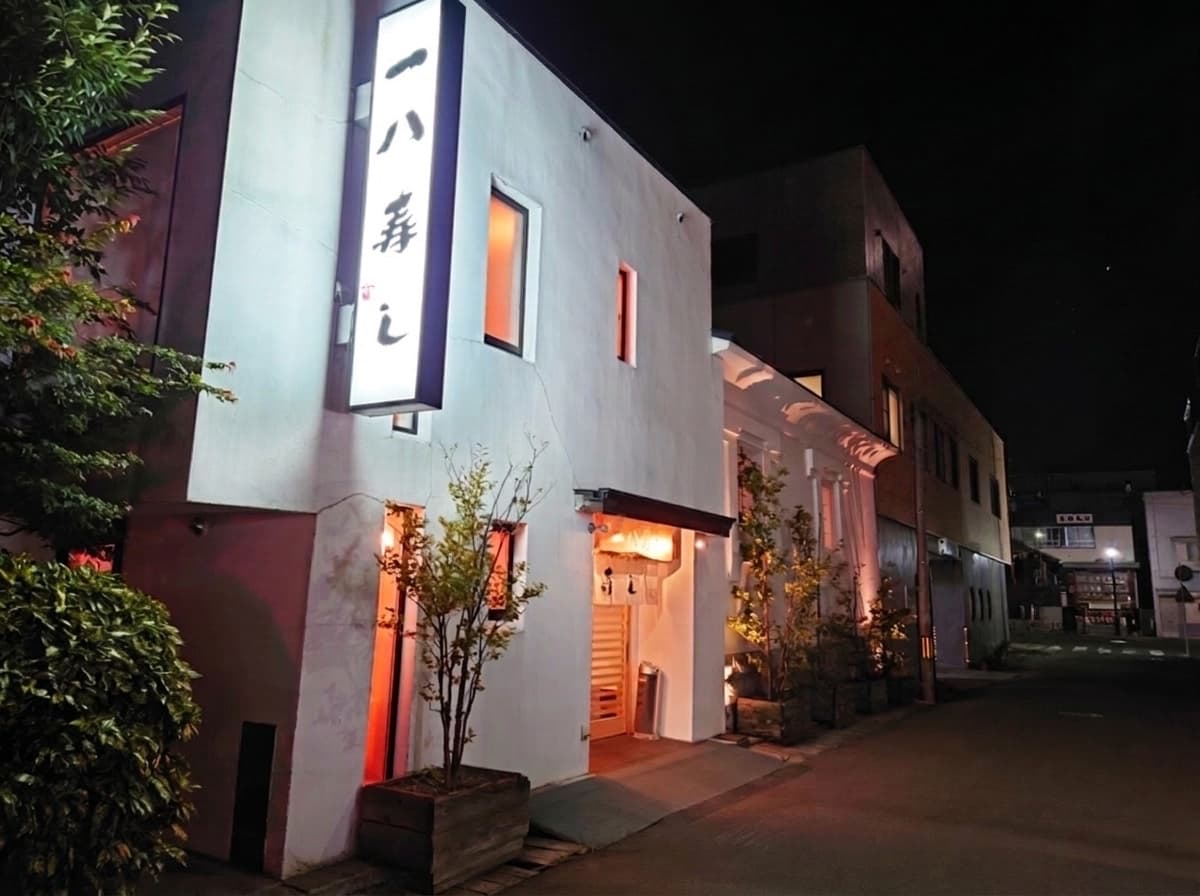
Kagoshima faces one of the richest, strangest stretches of sea in Japan: a warm-current bay under an active volcano, fished for species most Tokyo sushi masters never handle. Since 1989, Shinji Nomura has built his eight-seat counter on a single rule: Kagoshima fish only, bought not at market but directly from fishermen who catch for him, then aged, cut, and warmed to a schedule he calculates per species, per day.
What you eat
Deep-sea prawns from 250 meters down. Rare snappers priced like jewelry. Horse mackerel from Izumi, kanpachi, and kubiore saba — the "broken-neck" mackerel of Yakushima, the island where Nomura was born. Longfin squid rested until it turns sweet ("sushi is decided by the squid," he says). Each seat carries a battery of house-made seasonings — his own soy, ponzu, black sesame, sun-dried salt — and he tells you which to use, piece by piece. Regulars call the nightly show Nomura gekijō: the Nomura theater.
Tokyo flies down for it
Tokyo diners fly to Kagoshima for dinner and fly home the next morning: eight seats, night only, and fish that never leaves the prefecture. Cash only, which tells you how little this house has ever had to explain itself.
The land around it
This is the sushi dinner that anchors a southern itinerary: the Sakurajima volcano smoking across the bay, the samurai garden of Sengan-en, sand-bath hot springs in Ibusuki, shōchū distilleries in every direction, and Yakushima's cedar forests, a hydrofoil ride away, where your chef's story began.
Best for
Sushi obsessives who have done the Ginza counters and want to taste what Japan's regional seas can do, narrated by the man who has spent thirty-five years translating one bay into nigiri.