The pilgrimage soba house of Japan — one seating at 11:30, Friday to Monday, eighteen seats in a forest log house, and a seiro rolled hair-thin that people cross the country to eat.
By SHOKU NOREN TeamFacts last verified September 2026How we check
In shortJuwari soba — one fixed sequence, one seating a day, in a log house at 1,000 meters. Reservations run in Japanese and are hard to place from abroad, so our Tokyo desk requests the table for you, by phone and in Japanese.
Price
cash only
Hours
One seating — everyone enters together at 11:30 (Friday–Monday)
Closed
Tuesday–Thursday · winter operation depends on the snow — confirm by phone
Seats
18 seats · minimum 2 guests · no children 10 and under
Private rooms
None
Payment
Cash only
Getting there
No station — a log house in the forest of Iizuna Kogen, about 30 minutes by car from Nagano city. Car navigation fails here; the house explains the way when you book
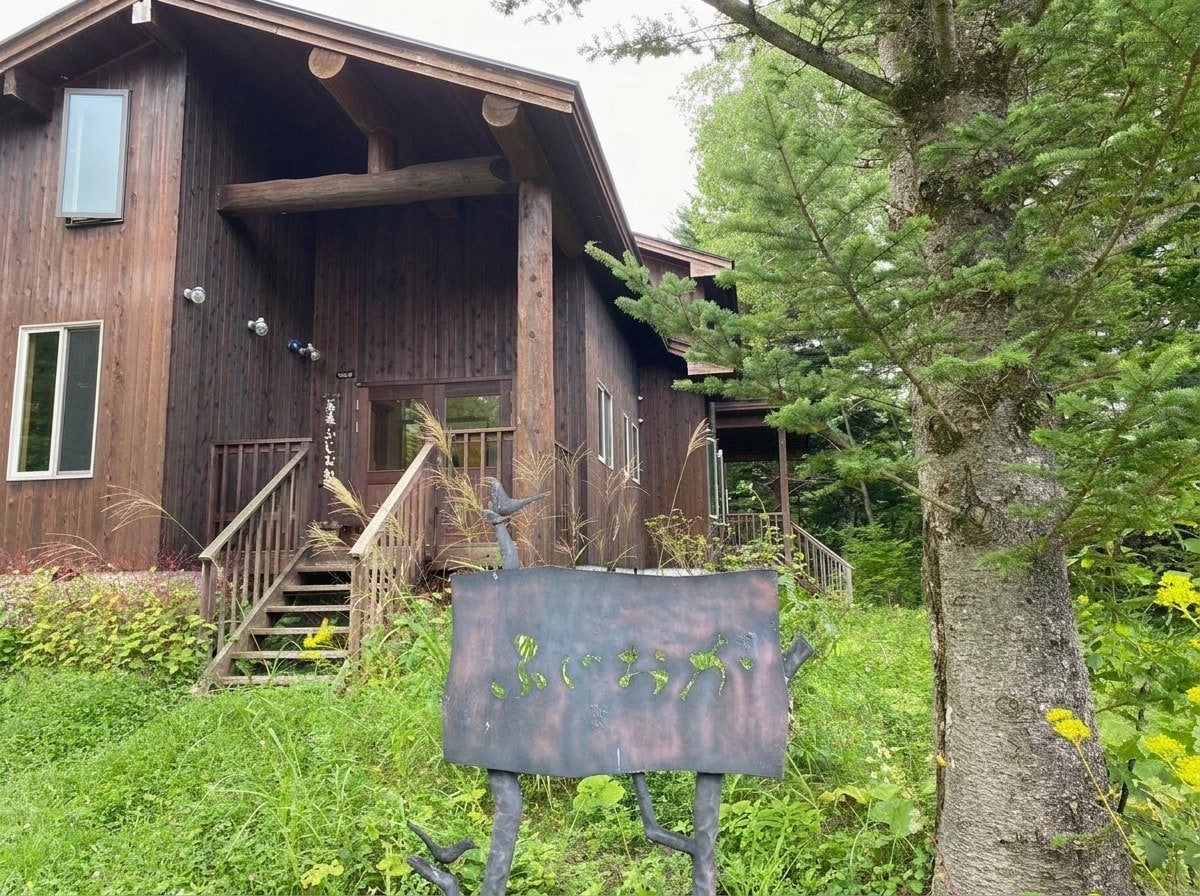
Fujioka taught himself soba — Japan’s buckwheat noodle, a craft
usually passed master to apprentice — and has served it in his own
style since 1983. He began at Kurohime, and in 2009 moved the shop to
a log house in the forest of Iizuna Kogen, about a thousand meters up
and thirty minutes by car from Nagano city. Inside there is a grand
piano and shelves of classical records; outside, only forest. Car
navigation fails here, and the house explains the way when you book.
Eighteen seats. For a stretch of years this was, by Tabelog’s national
ranking, the highest‑rated restaurant in Japan of any genre; the
review site’s “100 best soba” list has named it repeatedly from 2017
through 2025.
What you eat
There is no menu. Everyone receives the same sequence: a few dishes of
mountain vegetables, a bowl of soba porridge, and then the seiro — the
cold noodles themselves, served on a lacquered bamboo tray. They are
juwari (100% buckwheat, no wheat flour to bind), rolled hair‑thin yet
taut, faintly green, and eaten first with nothing at all — the point
is the aroma. A famously thick sobayu (the cloudy noodle‑cooking
water, drunk at the end) closes the meal. Those who want more may add
sobagaki, a soft‑kneaded buckwheat dumpling, or a second seiro. The
Cash only.
The covenant
One seating a day. Everyone enters together at 11:30, Friday through
Monday; the house rests Tuesday to Thursday. Four days times eighteen
seats is seventy‑two covers a week, for the whole country. The only
way in is the telephone, and it opens exactly one month before your
date for just four parties a day — regulars describe redialing until
the line connects, and weekends go on that first day. Minimum
two guests, no children ten and under, and punctuality is part of the
agreement: the meal begins as one room. In winter this is snow
country, and whether the house is operating at all is itself a phone
question. Every step of that — the one‑month call, the directions, the
season check — is conducted in Japanese, which is why a desk that can
dial at the right hour changes the odds entirely.
Go if you
Will drive thirty minutes into a forest for a single tray of noodles —
and want to understand, at the first taste, why everyone else in the
room did the same.
Free release-date alerts: the day before, on the morning of release day (08:00 JST) and about 30 minutes before when the time is known — or a weekly summary if the house opens a little every day.
Soba Fujioka: common questions
Can you book Soba Fujioka from abroad?
Yes, through our Tokyo desk. Phone only (026-239-2677), from exactly one month ahead; four parties a day, minimum two guests. Our desk calls when the line opens and can advise on timing and transport; in winter this is snow country, and the season's operation itself must be confirmed by phone. We call the restaurant for you, in Japanese, and the ¥6,000-per-seat fee is charged only if we confirm your table — no seat, no fee.
Some of these links are referral links: if you book through them we may earn a small commission, at no extra cost to you. Restaurants never pay us to be listed or ranked. Editorial policy
Cite this page
Facts on this page were checked by our Tokyo desk. You are welcome to quote them with a link: