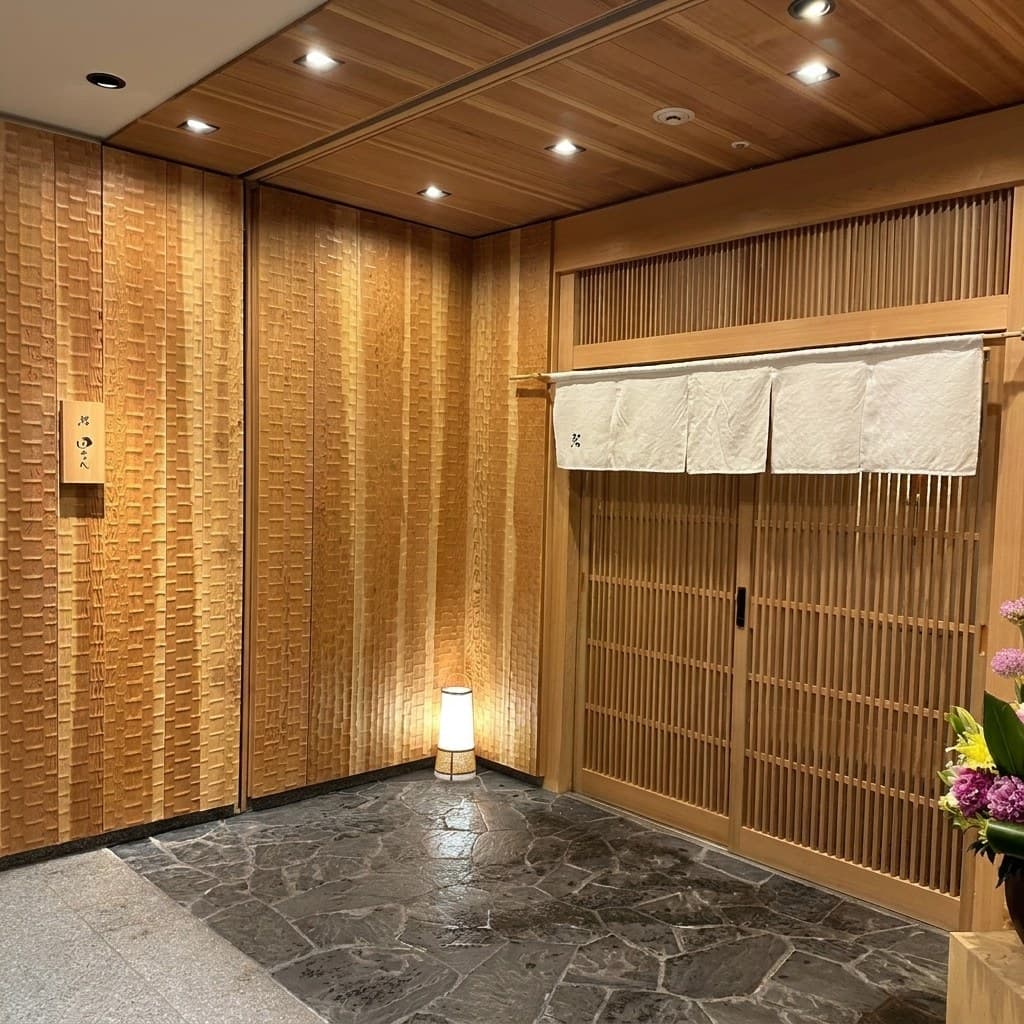
Hokkaido has long had the fish. What it did not have, until the late twentieth century, was the refined Edo technique for turning that fish into edomae sushi. The story of how Tokyo’s craft traveled north — and then spread across Japan — runs through one counter in Sapporo. Here is that lineage.
Edomae comes north: Shimamiya and Sushizen
Tsutomu Shimamiya spent three years at a sushi shop in Yokohama, then trained in the Tokyo tradition under Kazuo Nakata at Nakata. He returned to Sapporo in 1968, and in 1971 opened Sushizen in the Susukino district; the main house moved to Maruyama in 1984. He is remembered as the pioneer who established edomae sushi in Hokkaido, marrying Edo technique to the region’s extraordinary seafood.
What Edo technique does to northern fish
The marriage matters because Hokkaido’s larder is not Tokyo’s. The island’s icons — uni from Rishiri and Shakotan, botan shrimp, surf clam, autumn ikura, the deep‑red kinki of the Okhotsk coast — are usually served raw and unadorned, on the theory that freshness is everything. The edomae counters of Sapporo apply the opposite creed: cure, marinate, age, and simmer, so that a local fish tastes more like itself. Vinegared rice seasoned to stand up to fatty northern fish, soy‑marinated salmon roe in place of plain, kombu‑cured white fish using the island’s own kelp — this is what Shimamiya’s school actually changed. Even Hokkaido’s famous hairy crab, a winter ritual we cover in the Japan crab season guide, appears at these counters worked into edomae form rather than simply boiled.
The Sushizen family
Sushizen’s reach comes from the cooks it trained, who now run counters in Sapporo and elsewhere in Japan. Who they are, and which of their counters you can book, is in our Sushizen family tree. Sushi Ginza Onodera is a restaurant group, not an offshoot of Sushizen; the connection is that its first head chef, when it opened in 2013, had trained there.
Eating this lineage today
For a visitor, the takeaway is simple: world‑class edomae is not confined to Tokyo — and in Sapporo it costs meaningfully less. Top counters in the city generally run ¥15,000–30,000 per head, under the ¥30,000–60,000 now standard at Tokyo’s elite, and booking is kinder too: lead times of weeks rather than months, and far less of the regulars‑first gatekeeping of the capital (as of July 2026). The practical mechanics are in our guides to booking restaurants in Hokkaido and to eating through Sapporo, from Susukino’s late‑night counters to the Maruyama district where Sushizen’s main house settled. Time a winter trip and the same counters put you at the center of crab and uni season. For the fuller picture of how these branches connect, see our family tree of edomae sushi. When you are in Hokkaido, put your dates on the request form and we will try a counter worth your evening from our collection — ¥6,000 per seat, charged only if we secure the table.