In shortShippoku, Nagasaki's Japanese, Chinese and Dutch banquet shared from great platters. You can book it online yourself, or our Tokyo desk can request the table for you.
Price
Lunch ¥14,520–17,160. Prices are indicative, as listed on TableCheck (September 2026). · shippoku full course ¥23,760 and up (tax & service included) Prices are indicative, as listed on TableCheck (September 2026).
Hours
12:00–15:00 (last order 13:00) · 18:00–22:00 (last order 19:00)
Closed
Irregular, mainly Tuesdays
Seats
Tatami rooms — 12 private rooms, about 300 seats in all
Shianbashi tram stop, about 4 minutes on foot (about 13 minutes by tram from JR Nagasaki Station)
Nagasaki was Japan’s one window on the world for centuries, and its
table shows it. Shippoku — a banquet where Japanese, Chinese and
Dutch cooking meet on great platters shared by the whole table — is the
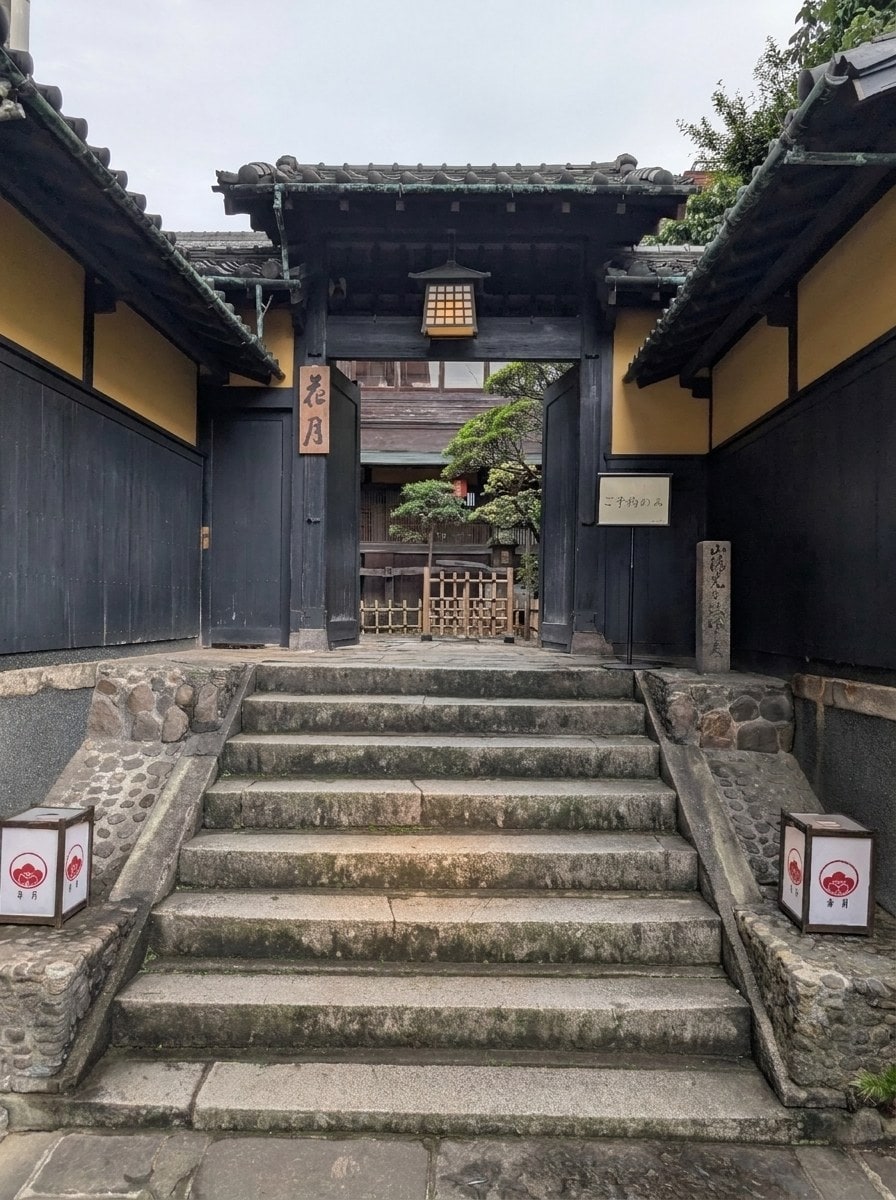
city’s own cuisine, and Kagetsu serves it inside history. The house
stands on the grounds of the Hikitaya, the flagship teahouse of the
Maruyama pleasure quarter, opened in 1642 and working until the geisha
liberation edict of 1873; in 1960 the site was designated a historic
landmark of Nagasaki Prefecture. It is a ryotei (a traditional banquet
restaurant), and it takes no walk‑ins at all.
What you eat
Shippoku the way it is meant to be taken: guests in a circle reaching
into large platters, the Japanese, Chinese and Dutch strands of
Nagasaki’s past laid out on one lacquered table. The banquet opens with
the ohire — a clear soup of one fin per guest — and by custom no one
lifts chopsticks until the hostess gives the word; the ritual is part of
what you book. Lunches run ¥14,520 to ¥17,160; a full shippoku course. Prices are indicative, as listed on TableCheck (September 2026).
begins at ¥23,760, tax and service included, served in tatami rooms,. Prices are indicative, as listed on TableCheck (September 2026).
private ones among them, looking onto the garden.
The booking reality
The house is completely reservation‑only, from two adults, and
individual bookings open two months ahead — online on TableCheck,
which works in English, or by telephone in Japanese up to the day
before. Which room you sit in is part of the reservation
conversation: in the Ryu‑no‑Ma, the Dragon Room, a sword scar in the
post is attributed to Sakamoto Ryoma, and the house archive, the
Shukokan, holds calligraphy in his hand. Requesting a specific room, a
dinner slot, or a shippoku course for a party of two is exactly the kind
of negotiated detail a Japanese phone call settles in minutes and a web
form never quite does.
You can book it online yourself, or our Tokyo desk can request it for you. Request this table →
Go if you
Want Nagasaki’s shippoku where the city’s whole history of foreign
contact is written into the room — and would rather have the room, the
course, and the two‑month window handled for you than gamble on it.
Free release-date alerts: the day before, on the morning of release day (08:00 JST) and about 30 minutes before when the time is known — or a weekly summary if the house opens a little every day.
Shiseki Ryotei Kagetsu: common questions
Can you book Shiseki Ryotei Kagetsu from abroad?
Yes. Reservation only, two adults minimum — online on TableCheck (English) or by phone in Japanese by the day before; individual bookings open two months ahead. You can book online yourself, or our Tokyo desk can request the table for you; our ¥6,000-per-seat fee is charged only if we confirm your table.
Some of these links are referral links: if you book through them we may earn a small commission, at no extra cost to you. Restaurants never pay us to be listed or ranked. Editorial policy
Cite this page
Facts on this page were checked by our Tokyo desk. You are welcome to quote them with a link: