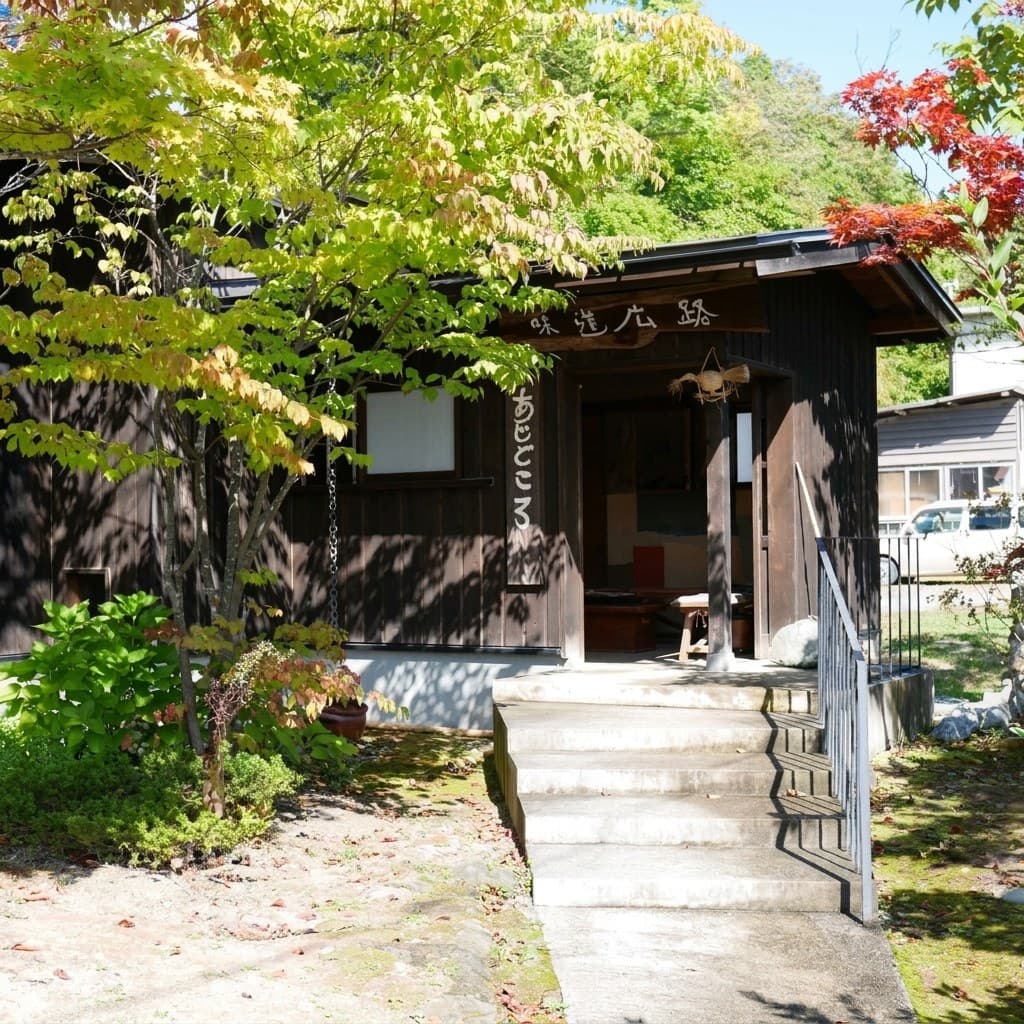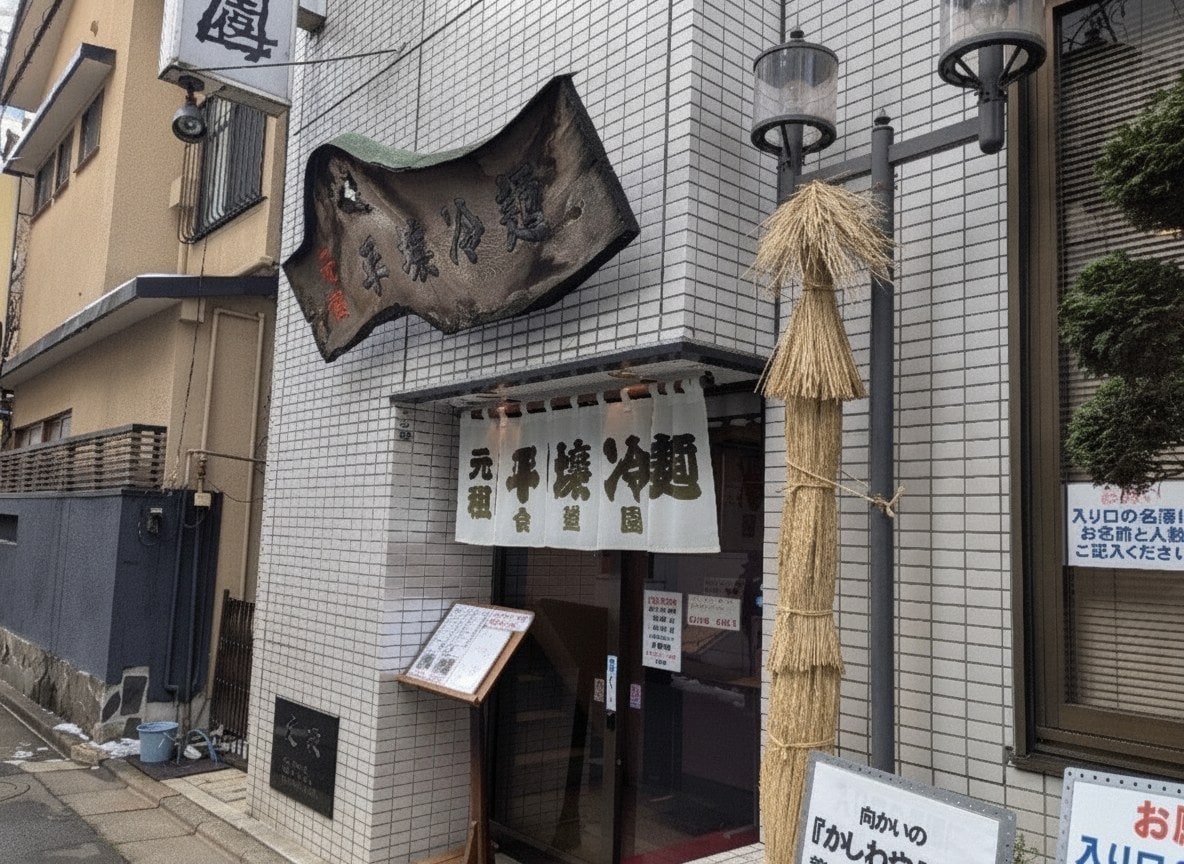
Morioka reimen — the chilled, chewy‑noodle soup that is one of this city’s three signature noodle dishes — was invented in this room. Teruhito Aoki, a first‑generation Korean resident of Japan born in Hamhung, opened Shokudoen in May 1954 with four tables. He crossed the clear, mild cold noodle of Pyongyang with the fiery one of his home Hamhung, then rebuilt the noodle itself — dropping the buckwheat of the Korean original for a pale, elastic strand of wheat and starch — and Morioka reimen was set. Seventy years on there is still exactly one Shokudoen: no branches, no franchises, one forty‑seat house grilling yakiniku (Japanese‑Korean tabletop barbecue) beside the noodles.
What you eat
The founding reimen: a chilled broth built roughly eight parts beef bone to two parts chicken, poured over that white, springy noodle, with the Hamhung chili heat behind it. You choose your own line on that heat — the house takes the kimchi from mild to extra‑hot, or serves it on the side (betsukara) so you can feed it in spoon by spoon. A round of charcoal yakiniku alongside is how locals actually eat here; the Tabelog 100 listing for yakiniku, East 2025, is for the grill, not just the legend.
The walk‑in reality
Lunch cannot be booked, and there are no platforms — only parties of three or more may ask by phone about a dinner table (019‑651‑4590). No cards either: cash only, no e‑money, no QR. You come, and if the forty seats are full you write your name on the list at the door and wait. Rest days are irregular — as a rule the first and third Tuesdays, posted month by month — so the real risk for a traveler is not a full house but a dark one. That is the piece a desk can actually solve: a call in Japanese to confirm that month’s rest days and closing time before you build a Morioka stop around lunch, and cash in your pocket does the rest.
Go if you
Travelers who want Morioka reimen at its true source — the original version of a dish now made all over the city, eaten where it was worked out — and who take a cash‑only, name‑on‑a‑list house as part of the pleasure.