Tokyo is too large to eat at random, but it is not chaotic. Its cuisines cluster by neighborhood, and each district has a clear specialty. Decide what kind of meal you want, and the map tells you where to go — and where to point your reservations.
Ginza — lineage sushi and kappo
Ginza is the establishment. Nowhere in Japan packs in more pedigree edomae sushi, including houses descended from the same master lineages, alongside polished kappo counters. It is the address for the classic, formal style — precise, quiet, expensive. Expect the district’s top omakase to run roughly ¥30,000–60,000 before drinks, with the trophy names higher (as of August 2026). The trade‑off is difficulty: the top counters here are among the hardest seats in the country. Street‑level detail is in our Ginza food guide; if Ginza sushi is the goal, our Tokyo omakase reservation guide maps every booking door, fee, and trap.
Nishi‑Azabu — the modern counters
West of Roppongi, Nishi‑Azabu and the Azabu hills hold Tokyo’s contemporary, chef‑driven rooms — smaller and more experimental than Ginza’s institutions, where younger chefs cook personal tasting menus. This is where to eat if you want the leading edge rather than the canon: intimate counters, single seatings, a point of view on the plate. Prices are gentler than the Ginza summit — most serious modern counters here sit in the ¥20,000–40,000 band — and the booking culture is different too: more of these rooms list on online platforms with card‑guaranteed deposits, so a well‑timed visitor can win them without a phone war. The wider hills are mapped in our Roppongi and Azabu food guide; for how the modern school’s most famous room actually books, see Den, a short ride north in Jingumae.
Kagurazaka — the ryotei quarter
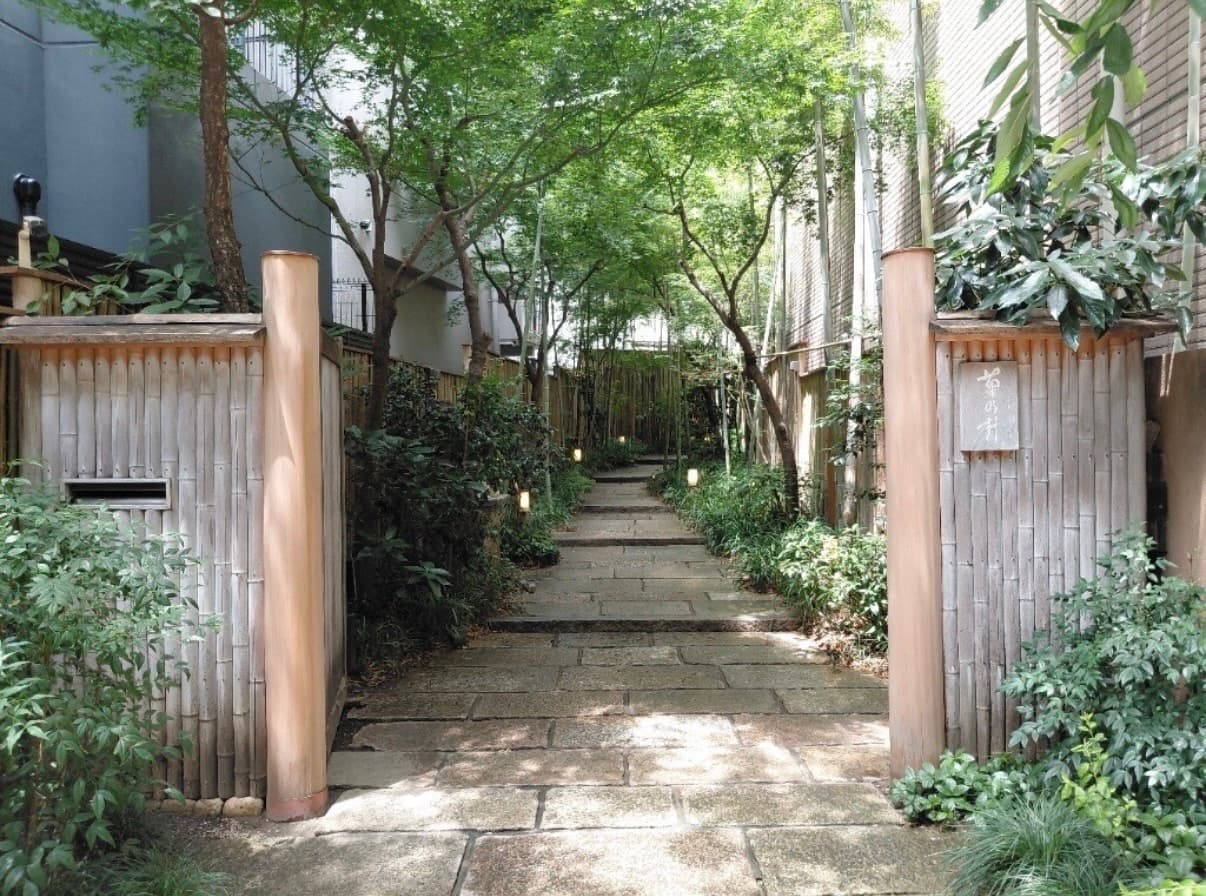
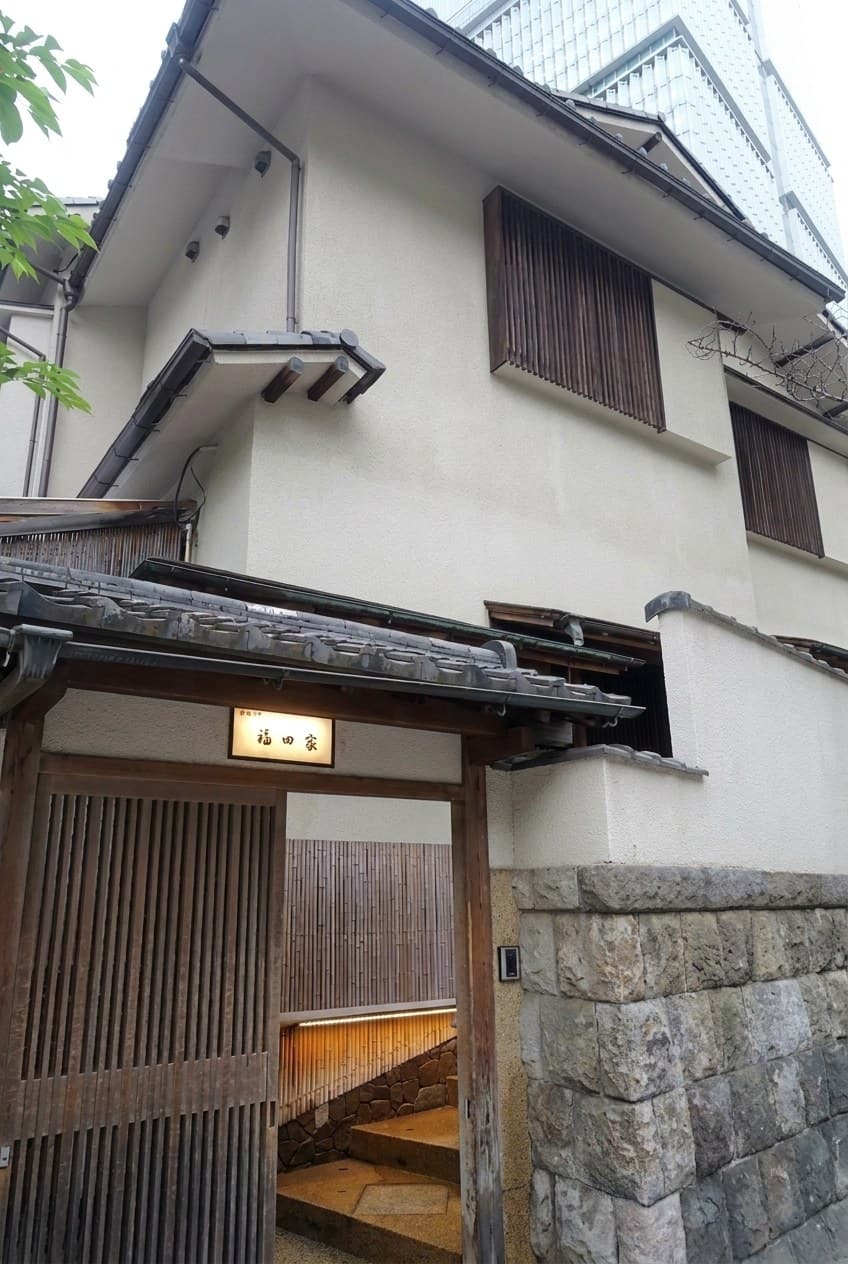
The old geisha district of Kagurazaka is the traditional pole: cobbled lanes, discreet ryotei, and serious kaiseki. It is also home to one of Tokyo’s most remarkable structures — a single family of restaurants that, unusually, can actually be booked. We explain it in the Kagurazaka Ishikawa family.
The specialist districts most visitors miss
Three poles cover the fine‑dining map, but Tokyo’s depth lives in its specialist quarters, each with its own logic:
- Asakusa and the shitamachi — the old‑guard single‑dish houses: tempura, unagi, sukiyaki, some over a century old, many walk‑in or a simple phone call. Our Asakusa food guide covers the survivors worth crossing town for.
- Nihonbashi and Kanda — Edo‑period specialists still on their original trades, from soba to anko nabe; see the Nihonbashi–Kanda guide.
- Tsukiji and Toyosu — the market morning: sushi breakfast, knife shops, the wholesale engine behind every counter above. Timing and tactics in our Tsukiji–Toyosu market guide.
Using the map
- Classic sushi or kappo, formal → Ginza.
- Modern tasting counter, chef‑driven → Nishi‑Azabu / Azabu.
- Traditional kaiseki and ryotei → Kagurazaka.
- Century‑old specialists, casual pricing → Asakusa, Nihonbashi.
Grouping your nights this way keeps travel short and reservations logical — and it matches booking effort to district: Ginza and Kagurazaka reward a month of lead time and a Japanese phone call, the modern counters reward fast fingers on release day, and the shitamachi mostly rewards just showing up early. The district is the easy part. The seats in our collection are what our desk is for, at ¥6,000 per seat; most release‑day counters we can also request, at ¥12,000 per seat, both charged only if we secure the table, and a free account sends you an alert before each release.