Few dishes divide first‑time visitors like shirako. To some it is the height of Japanese winter luxury; to others the description alone is enough to give pause. Either way it is worth understanding, because for a few cold months it appears on some of the best counters in the country.
What shirako actually is
Shirako (白子) is the milt — the sperm sac — of male fish, harvested when the sacs are full in the cold months. The two most celebrated kinds are:
- Tara shirako — cod milt, the more common and affordable version.
- Fugu shirako — pufferfish milt, rarer, richer, and treated as a true delicacy.
The texture is the point: soft, creamy, almost like a warm custard, with a mild and faintly sweet flavor rather than anything strongly fishy.
When to eat it
Shirako is firmly a winter ingredient, peaking from roughly December through February. Cold water is when the milt is fullest, and fugu shirako in particular is bound to the winter pufferfish season — it ripens late, so the best fugu shirako concentrates from late December into February, a window inside the window, and some houses serve it into March. Cod shirako arrives a little earlier and lingers a little longer. As our seasonal sushi calendar shows, this is the same rich stretch that brings kanburi, the winter yellowtail and the Sea of Japan crab to the table — Japan’s cold months are its most luxurious eating.
How it is served
Kitchens prepare shirako several ways, and a good one may offer more than a single preparation:
- Raw, with ponzu and grated daikon
- Grilled (yaki shirako), which firms the surface and deepens the flavor
- Simmered or served in a light broth
- Deep‑fried (age shirako), crisp outside and molten within
- In hot pot, folded into a winter nabe
What it costs
The price spread is enormous, and knowing it protects you both ways. Cod shirako is an everyday winter pleasure: a plate of shirako ponzu at a good izakaya runs around ¥800–1,500, and it appears as a course inside mid‑range omakase at no supplement (as of August 2026). Fugu shirako is another animal entirely — the sacs are small, the prized ones come from torafugu (wild winter fish above all), and a grilled fugu shirako at a licensed specialist is a several‑thousand‑yen luxury, often the most expensive single item on the menu. If a very cheap “fugu shirako” appears on a tourist menu, assume it is cod. At top sushi counters, shirako chawanmushi or grilled shirako slots into the otsumami sequence in season — one more reason December through February is a connoisseur’s time to book.
Where to find it
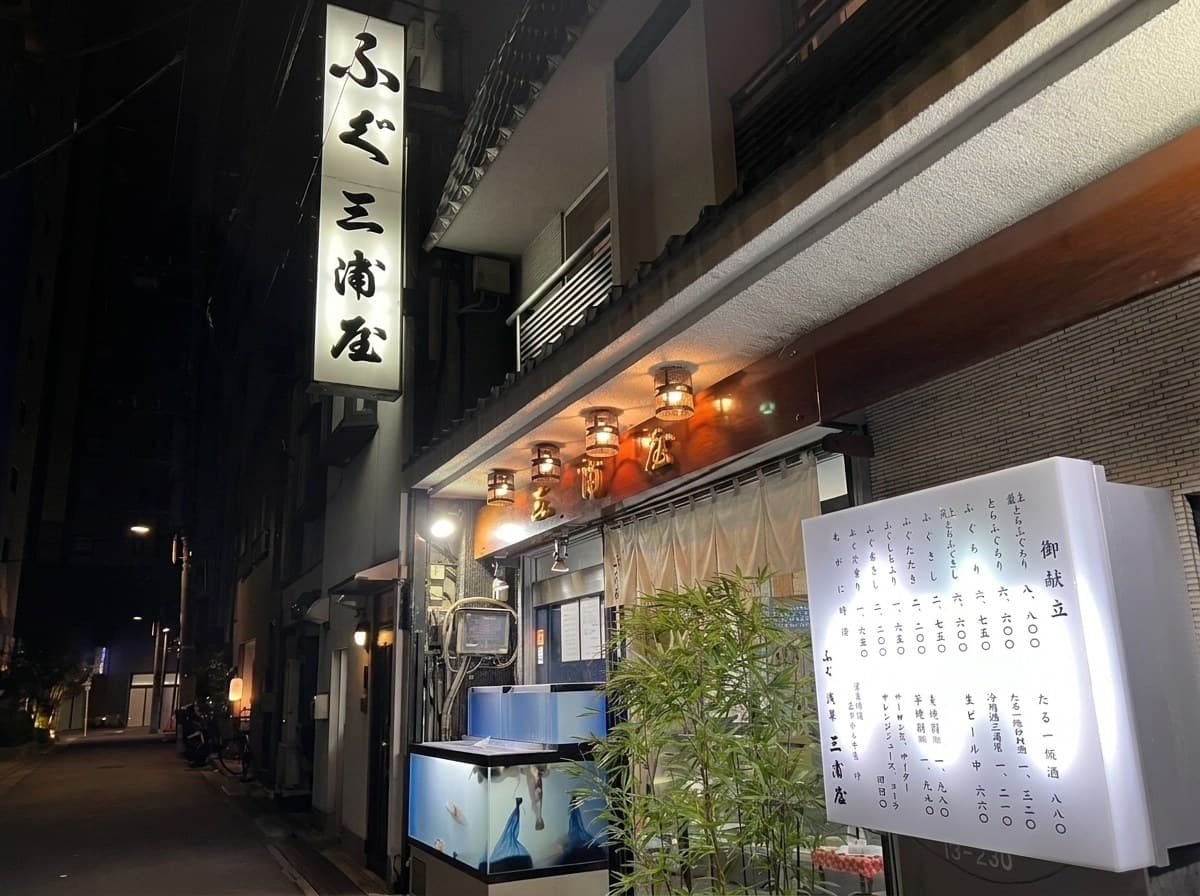
Cod shirako turns up widely through winter — at sushi counters, kappo rooms, and izakaya. Fugu shirako is the prize, and it is best sought at a licensed pufferfish specialist, where only certified chefs may prepare fugu. In Tokyo, the Asakusa pufferfish house Miuraya is one place the winter fugu season, shirako included, is taken seriously.
If a creamy winter delicacy sounds like your kind of adventure, plan a visit between December and February and ask the chef what the day’s shirako looks like. The magic words are “kyō wa shirako arimasu ka?” — “do you have shirako today?” — and at a counter it is exactly the kind of request that marks you as a guest worth cooking for; our sushi‑counter phrasebook has the rest of the vocabulary.